Our founders
The Organization for Prisoners' Rights was co-founded in Mogadishu in 2019.
The founder
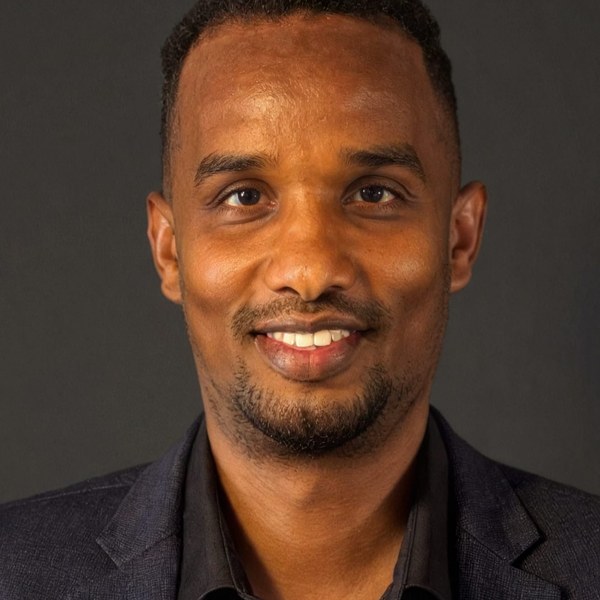
Ismail Abukar, co-founder and Chairperson. An independent investigative journalist and researcher with seven years of field research on Somalia's prisons, detention facilities and security services. He holds an MA in International Law and Human Rights from the University for Peace (2021) and served as Somalia's Youth Representative to the African Union from 2019 to 2021. He has held no government role since 2021.
How OPR began
Ever since I was ten years old, I wanted to help people who are marginalized. I was born and grew up in a village where people from minority clans are marginalized, denied rights and discriminated against. I wanted to help those communities, and other communities that struggle, because even some communities of the major clans struggle. I always wanted to help people in dire need.
In early 2019, I was sitting in a restaurant in Mogadishu, having a coffee, my laptop open, researching the conditions these people face in detention facilities, prisons and holding cells. How many people are detained or arrested in Somali prisons? How many are juveniles? How many are women? How many are convicted? How many are waiting for trial? How many are held in the Somali Criminal Investigation Directorate (CID)?
Nothing came up. No organization was covering what goes on in these prisons, detention centers and other facilities the government uses to detain people. Why was there no organization dedicated to documenting it?
The next day I went to a colleague who works with Somali civil society organizations. I told him the idea. He had never thought of it, and he was thrilled that we would be the first to do this.
Then I went to the Ministry of Justice and Constitutional Affairs and to the prison department. I asked who is monitoring what happens in these facilities. They told me they monitor nothing. They only get the names and the number of people held, and that is it. They had little to offer.
I went to the National Independent Human Rights Commission of Somalia (NIHRC) too. I asked whether they get reports from the Custodial Corps, the department responsible for the prisons. They said no. Do you receive reports from all 20 districts of Mogadishu? No. From the NISA detention facilities? No. Data from the CID? No. They had no idea what was going on. They said they have an independent committee that investigates when violations happen. I asked who tells them violations are happening there, because no independent organization is dedicated to writing about the violations in these facilities. They had no answer.
Without documentation, we don't know these people's day-to-day life. We don't know the violations in these facilities, the torture, the impunity, everything the government is doing, because nobody is monitoring it and nobody documents it. So the government gets away with whatever it does. Whatever happens there stays there, hidden, and dies there.
Then I started thinking about a name. The first option was Prison Defenders. Then one night I thought, defenders means we have to go to court and defend these people, and we needed an organization that documents what is happening in these facilities. So I came up with the Organization for Prisoners' Rights, which shortens to OPR.
That is why I founded this organization. Ismail Abukar, Chairperson
What OPR was founded to do
OPR's founding principle is fair treatment for all prisoners, regardless of clan. Recognising that minorities suffer disproportionately in detention, it created a dedicated department for minority prisoners' rights, which investigates cases, provides legal advocacy and direct support, and documents violations for accountability.
OPR began its annual situation report in 2022 and has produced one every year since. The reports go to the UN, the UK, the US, the European Union, the African Union, the ICRC and other stakeholders interested in conditions in Somalia, especially those that fund the Somali government.
OPR is independent. It does not accept financial support from the government, and every report it publishes is sourced, dated and kept online. Its annual assessments of Mogadishu's prisons are on the reports page.
The rest of the board and the team are listed on the About page.