The Count Stops at the Airport: Somalis Still Inside Libya’s Prisons
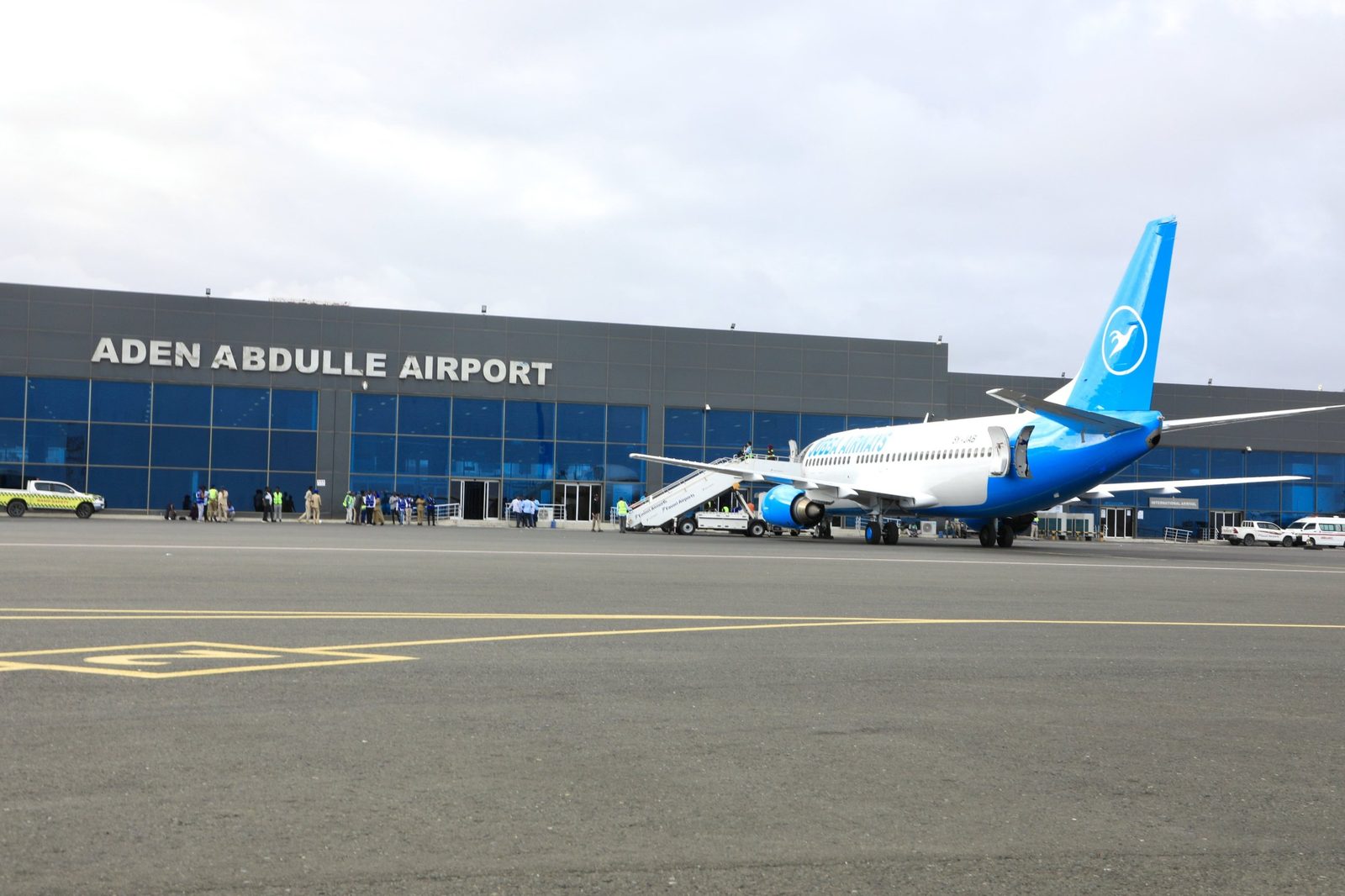
The first thing the young man said, speaking to a camera inside Mogadishu’s airport after the flight from Libya, was that he was not worried about himself. He was worried about his friends. He had left them in a prison where, he said, officers beat Somali men and Somali girls alike, where the sick were getting sicker, and where the men who were not chosen for a flight home lost hope.
Today another 169 Somalis, described as released from prisons in Libya, were flown home: 140 to Mogadishu and 29 to Hargeisa, according to Caasimada. It is the third landing in under seven weeks, after 162 young people on 14 October and 171, or 181, on 14 September, which I take to be the flight in his video. The same day, a reception centre in Tajoura, east of Tripoli, said 113 Somalis had left through Mitiga airport as part of its “expulsion plans”. The International Organization for Migration (IOM) calls these returns voluntary. Somalia says the people were released from prison. Libya calls it expulsion.
The flights are good news, and the government has earned credit for them. But all three descriptions count the people who left, and none counts the people who stayed. Libya’s own anti-migration department told Somalia’s human rights commission in August that nearly three hundred Somalis are held in its prisons in the east and south; seventy of them were in one prison in Benghazi. I could not find a published list of the rest, or of where they are. This report sets out every landing I could date since October 2024, what the two young men say is done to the people still inside, and what the UN, Amnesty International, Médecins Sans Frontières and IOM’s own releases say about the same prisons. Much of it matches. Some of it, including the place the men name, I could not confirm.
Disclosure: I chair the Organization for Prisoners’ Rights (OPR). OPR did not interview the two men. I watched a video of them posted on Facebook and translated what they say from Somali. I could not see the exact date it was posted; its oldest comments are about five weeks old, which puts it in the weeks after the 14 September landing, and I treat it as the account of people from that flight. Both men gave their names on camera. I am not publishing them, because both are now in Mogadishu and are accusing the officers of a state that still holds Somalis, so I call them the first young man and the second. I could not verify their individual accounts, so I describe them as their accounts and check them below against UN, rights-group and detention records.
The first young man said he had been deported from Libya and was now in Mogadishu. He said he was not worried about himself. He was worried about the friends he had left in the prison. Police and prison officers were beating them, he said, and Somali girls and young women were being beaten too, by male officers. He said he could not bear the beatings himself and could only imagine what a Somali girl feels when she is beaten by these men.
He said some of the people he left behind are sick. He also described something I had not seen in any official account: when one man is chosen to be flown back to Somalia, those not chosen lose hope, and he said that loss of hope makes them ill. He described the prison as very hot, with too little food and no fans, air conditioning or filtered water. He asked the Somali government to go back and bring out the Somalis who remain.
The second young man said he had been held in Libya for about two years. He said he was tortured and beaten in harsh conditions. He said the officers beat Somali girls and young women with the stick they carry, and that he could not bear that stick himself and could only imagine what it does to a girl. The Somali word he used was gabdo, which covers girls and young women, so I do not know whether any of those he means were minors. He said he was happy to have landed in Mogadishu and wanted the government to keep going until all the Somalis in those prisons are out.
Both men named the place where they were held, in a way that I hear as “Mirshad” or “Barshad”. I searched Libyan prison and detention reports in English and Arabic and could not match the name to any known prison or town. Libyan holding sites go by local names that do not appear in official lists, and Somali speakers often render Arabic names in their own way. I am not going to guess a town. The first young man did not say how long he was held, and neither said when he was arrested or why. Their account is a few minutes of speech in an airport, and I treat it as a statement of what these two people say happened to them.
The beatings are the best-documented part. A joint report by the UN human rights office and the UN mission in Libya, published on 17 February 2026 after interviews with nearly a hundred migrants, found killings, torture, sexual violence and forced labour across Libya, which the UN’s human rights chief and the head of its mission called systematic. The report, Business as Usual, covers January 2024 to December 2025 and lists Somalia among the interviewees’ countries of origin. It says leaked videos from February 2025 showed officials at the Ajdabiya detention centre in the east beating and whipping migrants, children among them. An Eritrean man held for about nineteen months at Ain Zara in Tripoli told the UN he was deprived of food and beaten by guards when he refused to work or pay. The report also describes guards at an unofficial site beating people with gun butts and sticks. UN News’s account of the report quotes the head of the UN mission saying that detention facilities in Libya are “breeding grounds for gross violations.”
Somalis appear in that record by name. The same report says a Somali man was filmed being beaten and tortured in Kufra in early February 2025, and that more than two hundred people from Eritrea, Ethiopia and Somalia were held for over a year in Sabha and Brak al-Shati. Amnesty International, in a June 2026 report on the crackdown on migrants, recorded a Sierra Leonean man who said guards beat him daily for four days until he paid a ransom. Medical charity Médecins Sans Frontières described a sixteen-year-old Somali boy tortured in a smugglers’ prison in 2019 while his mother was pressed to pay. In 2018, Somalia’s own ambassador to Libya told an IOM release that migrants there are kidnapped, beaten and often have nothing to eat or drink.
IOM’s own releases say more about detention than its “voluntary” label suggests. A 24 October 2024 release says a significant number of Somali migrants in Libya are exposed to violence and torture by smugglers and traffickers. A 20 November 2025 release says Somalis in Libya are often in detention centres where they face insecurity, food shortages, lack of shelter and inadequate medical care. Returnees themselves have said as much. Hiiraan reported on 24 March 2025 that the 145 who landed that day had been held in Libyan detention centres for nearly a year, quoting one who said he came back “after witnessing several of my friends die in prison”.
On conditions, the independent record describes what the two men describe. The UN report found about nine hundred people held in September 2025 at Tobruk in a facility built for 150, with inadequate food, water, sanitation and health care, and guards demanding payment for release. The Global Detention Project lists Ganfuda in Benghazi, where Somalia’s human rights commission found seventy Somalis in August, as holding 1,635 people at the end of 2025 against a standard capacity of 450, rates its conditions deficient, and flags inadequate ventilation, food and water in earlier years. UN interviewees described extreme heat in two detention sites in western Libya, and the report records scabies and ulcers left untreated, and more than twenty tuberculosis deaths since December 2024 in facilities in the south. Amnesty’s June report quotes a Sudanese asylum seeker held in Tobruk in a hangar with at least a thousand others, whose request for insulin guards ignored.
On women, the record supports part of what the men say and not all of it. All forty-five women and girls the UN interviewed reported sexual violence, including rape and attempted rape. A Sudanese woman at Abu Salim in Tripoli said male guards harassed and strip-searched her, and women there said others were taken away and did not return. That fits the first young man’s account of Somali women at the mercy of male officers. I found no independent report that describes Somali women beaten with a stick by male officers, or any report on the place they name, so that claim rests on these two men for now.
Two other parts of their account rest on them too. I found nothing independent on the first young man’s statement that those not chosen for a flight lose hope and fall ill, though the UN’s finding of expulsions without individual review, discussed below, shows why a detainee could believe release is not in his hands. Nor could I confirm the prison’s lack of fans or filtered water at the place they name, although the findings above show those shortages are common across Libyan detention.
The programme that brings Somalis home from Libya began in August 2022, funded by the European Union and run by IOM. IOM said in September that about 2,000 Somalis had been returned since then. The table lists the landings I could confirm. Where a government page had no date, I give the month I could infer and mark it with an asterisk. I did not add up the totals, because the counts disagree and some pages do not say who was counted.
| Landed | People | Mogadishu / Hargeisa | Source |
|---|---|---|---|
| 24 October 2024 | 164 | 109 / 55 | IOM |
| 5 December 2024 | 161 | 87 / 74 | EU delegation |
| 18 December 2024 | 147 | 116 / 31 | EU delegation |
| 24 March 2025 | 145 | Mogadishu | Hiiraan; Foreign Ministry |
| June 2025* | more than 30 | not stated | Foreign Ministry |
| 23 September 2025* | 184, or 173 | 152 / 32, or 151 / 22 | Foreign Ministry; allAfrica |
| 20 November 2025 | 165 | 152 / 13 | IOM |
| 15 December 2025* | 167 | 151 / 16 | Foreign Ministry |
| 23 April 2026 | 174 | Mogadishu | Shabelle Media |
| 2 July 2026 | 129 | 110 / 19 | Raxanreeb |
| 14 September 2026 | 171, or 181 | 129 / 42, or about 147 / 34 | IOM, via Xinhua; Dawan Africa |
| 14 October 2026 | 162 | Mogadishu | Shabelle Media |
| 29 October 2026 | 169 | 140 / 29 | Caasimada |
* Approximate. The page gives no full date. For 23 September 2025 I used the ministry’s “Tuesday” and allAfrica’s 24 September date. For 15 December 2025 I used the ministry’s “Monday” and its December upload folder; on that Monday Libya’s anti-illegal-migration agency announced deporting a group of Somalis held in eastern Tripoli, according to Hiiraan, but I could not confirm it was the same group. For June 2025 I give the month from the page’s file upload folder.
The table is incomplete at the start. IOM says it returned 457 Somalis from Libya between August 2022 and 24 October 2024, and 164 of them were on that day’s flight. Hiiraan reported in March 2025 that flights had run monthly since late 2023, with more than 800 citizens brought back. I found dated reports for none of the roughly 290 returned before October 2024, and IOM has not published a list of those flights that I could find, so they are missing here. IOM’s own totals also change by definition: it said in November 2025 that 1,394 Somalis had been supported to return from all countries since August 2022, and that nearly 557 returned from Libya in 2025 alone.
The counts disagree in two places. On 23 September 2025 the Foreign Ministry says 184 and allAfrica reports 173. On 14 September 2026, IOM and Xinhua say 171, three of them minors, with 42 landing in Hargeisa; the refugee commission, quoted by Dawan Africa, says 181, with 34 in Hargeisa and some brought from Sudan. I give both. The 129 who landed on 2 July are the same group that other outlets report as 129 or 130.
The Libyan side of today’s operation has now been reported too. The Malta News Agency, citing a statement on Facebook by the reception centre for irregular migrants in Tajoura, east of Tripoli, reports that 113 Somali nationals were sent home on 29 October through Mitiga airport, with IOM’s collaboration, and that such operations “will continue in the coming days.” I could not tell whether those 113 are part of the 169 Somalia reports, or a separate operation. The centre described it as part of carrying out “expulsion plans under current laws”, not as a voluntary return.
The European Union and IOM call these returns voluntary and humanitarian, and IOM says every return is voluntary, informed and based on the migrant’s own decision. IOM’s account of the September group is that they crossed several countries, then lived in Libya under hardship, exploitation and abuse by smugglers. The Somali government and the outlets that carry its statements say the people were held in prisons and released, as the government did again today. The Libyan centre calls it expulsion. Three descriptions of the same operation cannot all be complete.
The government’s own figures point to detention. After a visit by Somalia’s foreign minister to Tripoli in April, the two governments agreed to return about 400 Somalis held in Libyan detention, as the Libya Observer reported on 14 April, citing Somali media. Five landings have been reported since: 174, 129, 171, 162 and 169, which comes to 805 people on the lower figures. None of the reports says how many of those were the detainees named in the agreement and how many were people IOM would call stranded. That is a question the government and IOM can answer in one sentence.
The second figure matters more. In August, Somalia’s Independent Human Rights Commission visited Ganfuda prison in Benghazi and found seventy Somalis held there, eight of them women, one with her three-year-old child. Libya’s anti-migration department told the commission that nearly three hundred Somalis are held in prisons across eastern and southern Libya. That leaves about two hundred and thirty whose prison, town and condition nobody has published. IOM says hundreds more remain stranded.
The pressure on those left behind is growing, not easing. Eastern authorities said on 11 June that they held 7,596 people pending expulsion, and on 23 June the eastern prime minister issued a decree barring nationals of Sudan, Eritrea, Ethiopia and Somalia from entering Libya, according to Human Rights Watch. The UN found that expulsions are carried out collectively, without any review of an individual’s case. That is the setting for the first young man’s point about the list: if release depends on being chosen for a flight, then the people not chosen are waiting on a decision they cannot see or challenge, in prisons where the independent record shows the sick often go untreated. These are the people he was asking about.
Beating a prisoner is prohibited whoever does it. Libya is a party to the UN Convention against Torture and to the International Covenant on Civil and Political Rights, which bar torture and cruel, inhuman or degrading treatment and require that people deprived of liberty be treated humanely, according to the University of Minnesota Human Rights Library’s record of Libya’s treaty status. The UN’s standard rules for prisoners, the Nelson Mandela Rules, add that women prisoners should be supervised only by women staff. Both men say Somali girls and young women are beaten by male officers. If that is true, it would breach that rule as well as the ban on torture, and both men say it is still happening.
The Somali government should publish the names of the prisons and towns where Somalis are held in Libya, and how many are in each, without the personal details of those held. It should ask for independent monitors, including the International Committee of the Red Cross and its own human rights commission, to be allowed into those places and to speak to the women and the sick without officers present. It should put the women, the sick and the minors first on the next flight lists. It should also record what returnees say on arrival, with their consent, and pass it to the UN, so the accounts do not depend on a Facebook video.
The EU and IOM should say what “voluntary” means when the people returned have been in prison, or are described by Libya’s own officials as expelled, and how many on each flight were detainees. Libya’s authorities should end the beatings, allow access, and release people in line with the April agreement. Somalia is not the only country with citizens in these prisons. The governments of the other African states whose young people are held there should do what Somalia has begun to do, and do it faster.
Somalia has shown, flight after flight, that it can bring people out of Libya when it decides to. What it has not shown is where it is bringing them from, or who is next. The first young man did not ask for a flight for himself; he had his. He asked the government to go back for the rest. The test of whether it has heard him is small and can be met before the next plane lands: name the prisons, open them to the Red Cross and to Somalia’s own human rights commission, and say how many Somalis are inside today against Libya’s figure of nearly three hundred in August. If the government will not publish that number, the only count anyone has is the one kept by the Libyan authorities whose officers, these two men say, are doing the beating.
He said he was not worried about himself. The government, the EU and IOM have the planes, the money and the access to Libya’s officials to answer his worry. Until they say how many are still inside, and where, every flight that lands in Mogadishu will count the people who came home, and nobody will be counting the ones he asked about.

How to cite this piece
Abukar, Ismail, for the Organization for Prisoners' Rights. (2026). The Count Stops at the Airport: Somalis Still Inside Libya’s Prisons. Mogadishu: OPR. https://opr.org.so/news/the-count-stops-at-the-airport/